16 April 2026
Women of PDW: How Experience Shaped Architecture & Design
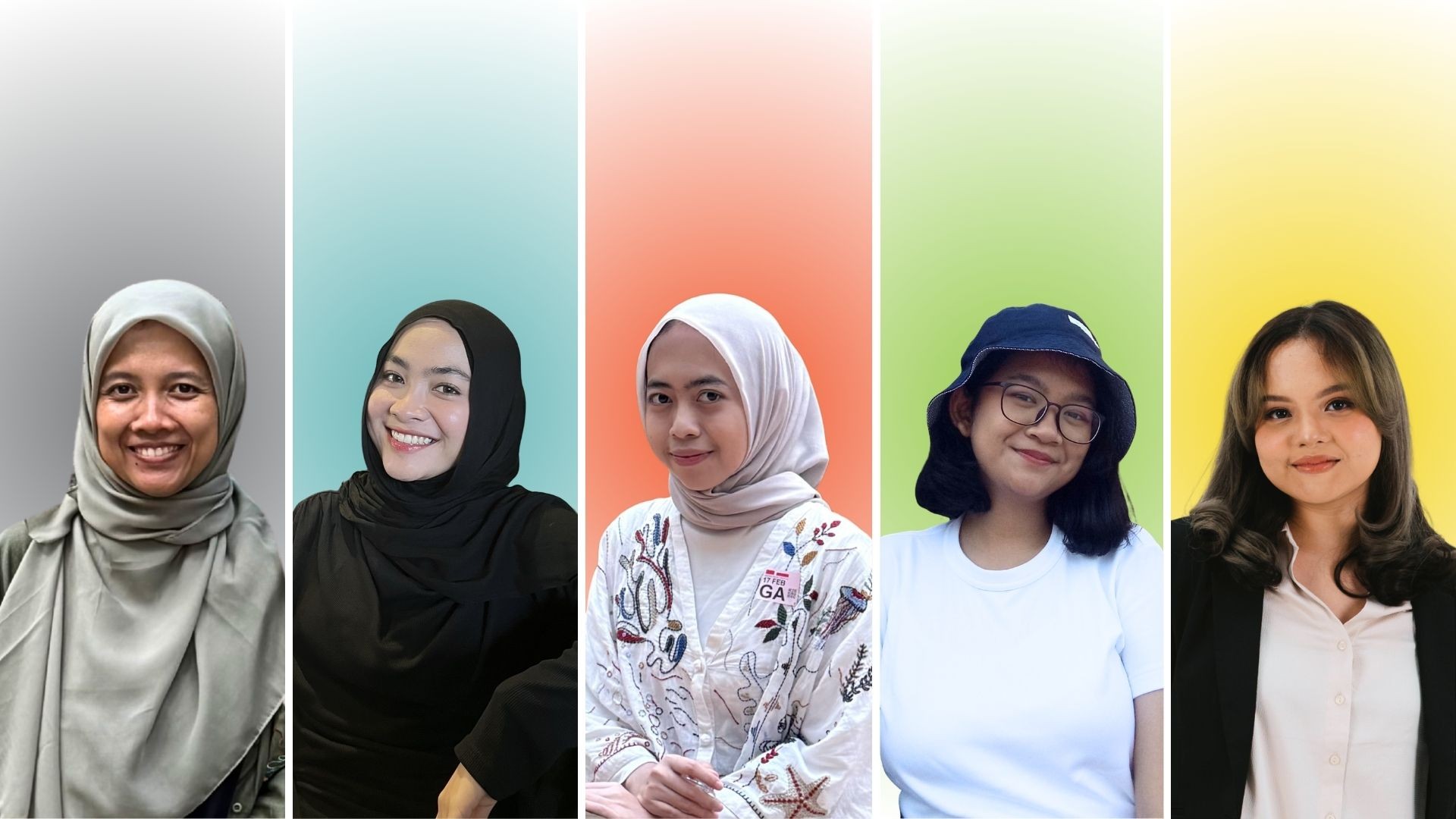
Att Pandega Desain Weharima (PDW), five women designers share how lived experience as a woman directly informs their approach to creating spaces that are safer, more inclusive, and more human-centered.
Women don't just design for people. They design from lived experience.
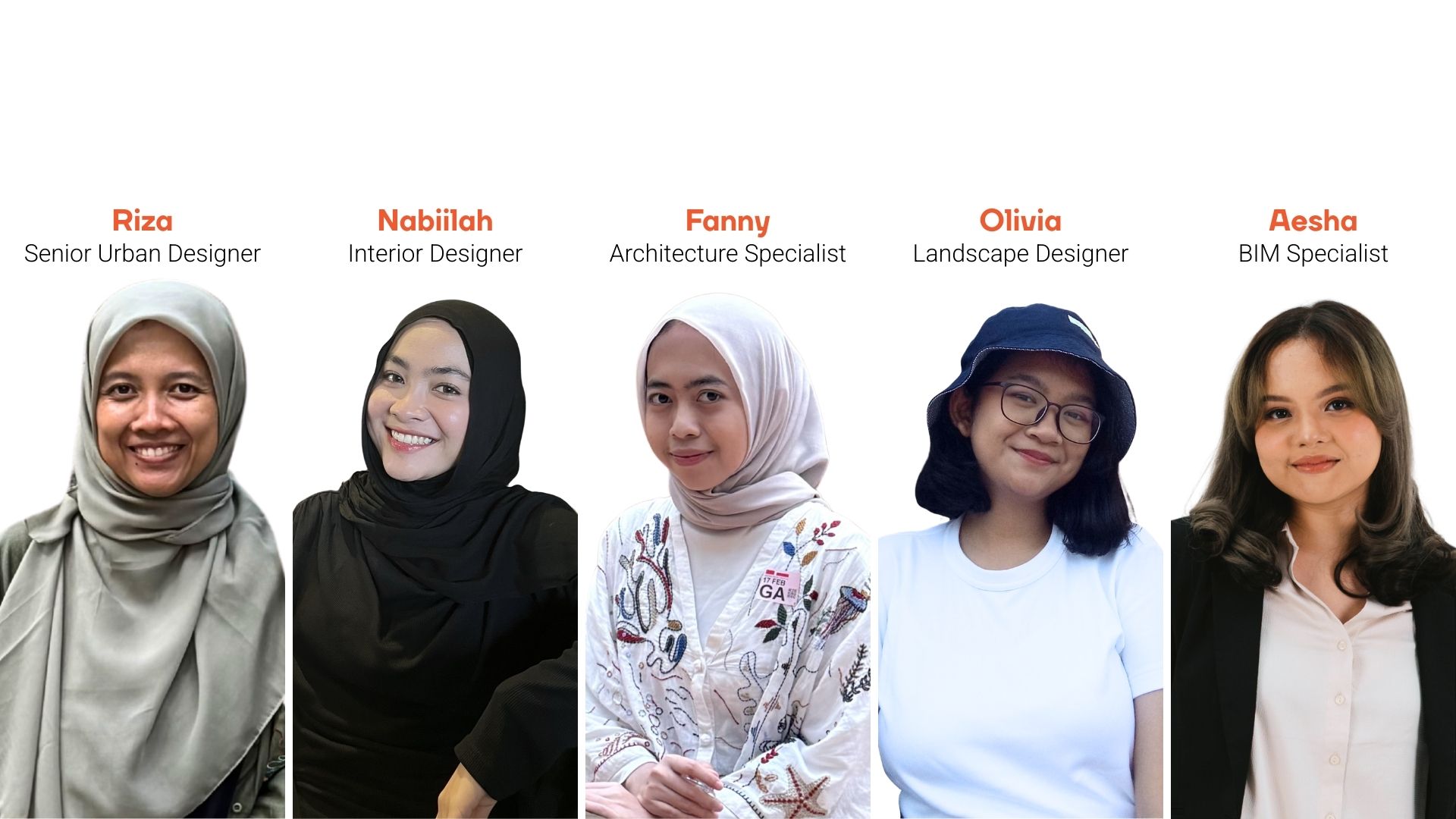
At Pandega Desain Weharima (PDW), a Jakarta-based architecture, urban design, and planning firm, the women on the team bring more than technical expertise to their practice. They bring an understanding of how space is felt — emotionally, physically, and socially. On International Women's Day 2026, we asked five of them the same question:
as a woman, how does that shape your design practice every day?
Their answers point to something that cannot be taught in a studio: the knowledge that comes from having navigated space as a woman.
Designing the City for Everyone
Riza, from PDW's urban design team, works at a scale where the stakes of representation are most visible: the city itself.
"As a female urban designer, everyday experiences have made me sensitive to how urban spaces are felt differently by different users. This enriches my design practice because I become more attentive to aspects of safety, comfort, and accessibility."
That sensitivity, she explains, translates directly into how she approaches inclusive design. "That sensitivity also pushes me to design spaces that are more inclusive and human-centered, by considering the experiences of groups that are often underrepresented, such as children, the elderly, women, and people with disabilities, so that urban spaces can be used more equitably and comfortably by everyone."
Equity in the city does not happen by default. It requires designers who understand what inequity feels like on the ground.
The Details That Make Space Livable
Nabiilah, from PDW's interior design team, names specific spaces that reveal what is often missing when women are not in the room.
"As a woman who may have a higher level of needs and sensitivity, I use intuitive sensitivity to pay close attention to details — not only aesthetics, but also needs, comfort, warmth, and safety."
Those details, she points out, are most visible in the spaces that require privacy: ablution areas for men and women, lactation rooms, restrooms. "All of this toward creating spaces that are safe and comfortable for both women and men."
These are not decorative concerns. They are functional ones — and they tend to get resolved better when the designer has personally needed them.
Seeing from Multiple Points of View
Fanny, from PDW's architecture team, articulates something that runs through all five perspectives.
"Being a woman gives me an additional perspective in understanding the needs of space users. Empathy, sensitivity to detail, and the ability to see from multiple points of view help me design spaces that make people feel more, understand more, and accept more."
That capacity to hold multiple perspectives simultaneously — to design not just for an idealized user but for the full range of people who will inhabit a space — is what connects all five voices here.
Space That Has Character, Where People Want to Stay
Olivia, from PDW's landscape design team, brings a perspective that is both grounded and playful.
"As a woman, my experience of using public spaces has significantly influenced my daily design process. I have become more attentive to aspects of safety and comfort, such as lighting, shaded areas, and accessibility for various groups of users."
But her practice does not stop at safety. "I also believe that public spaces do not always have to feel rigid or formal. Design that has character and brings in playful elements will create a sense of comfort that makes people feel at home."
Livability, for Olivia, is not just about removing barriers. It is about creating spaces that invite people to stay.
Spatial Empathy Starts with Personal Experience
Aesha, who works in Building Information Modeling (BIM) at PDW, draws a direct line between her lived experience and her sensitivity to space.
"As a woman, I feel that my lived experiences have made me more sensitive to how spaces are felt emotionally, especially in terms of safety and comfort. This perspective has also influenced the way I carry out my professional practice every day."
For Aesha, that sensitivity extends beyond the drawing board and into the way she works with her team. Beyond her technical responsibilities, she tries to contribute to a collaborative and supportive environment where every member feels heard and valued. "I believe that good design does not only come from individual taste or technical ability, but also from a healthy and supportive team environment."
As a Master of Urban Design candidate, she also sees continued learning as part of a larger responsibility: representing women who keep growing, thinking critically, and actively contributing to their field — inspired by those who fought before them to open doors for women in education, knowledge, and profession. "I hope my journey in this field is not only about practicing design but also about contributing to a more inclusive perspective in shaping the built environment that reflects diverse experiences, including those of women."
Why Representation in the Room Matters
What these five women describe is not a soft contribution to design practice. It is a structural one.
Architecture and urban design shape how people move through the world, who feels safe, who feels welcomed, and whose needs are considered non-negotiable. When the people making those decisions include those who have experienced space differently, the questions that get asked at the beginning of a project change. And so does what ends up built. A more inclusive built environment starts with representation in the room where it is designed. Human-centered design happens when the people shaping space include those who have experienced it differently.
At PDW, these are some of the voices that help us get there.
[PDW/PSY]