05 March 2026
Flood-Sensitive Landscape Design
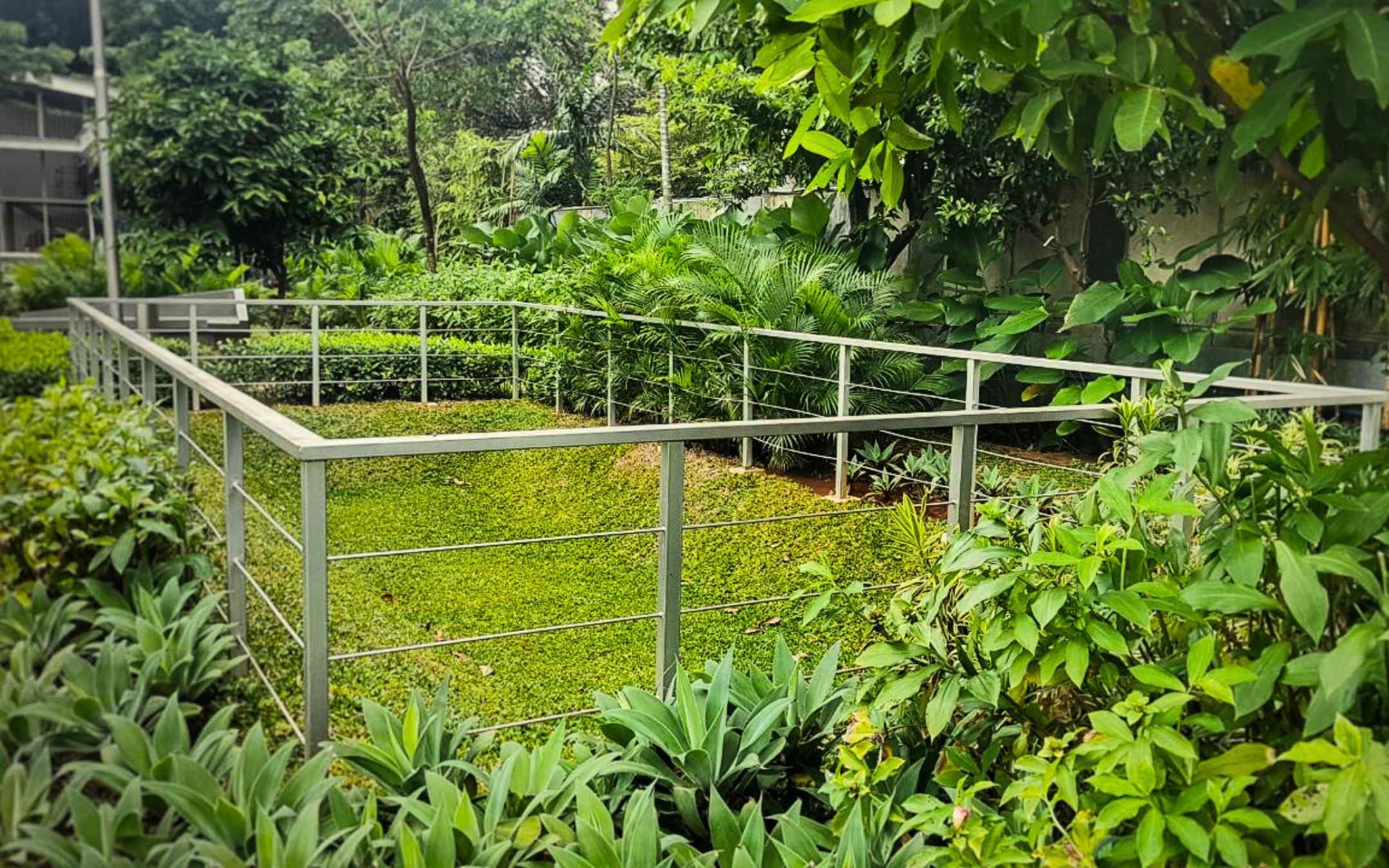
Pandega Desain Weharima (PDW) approached the TMT Building site in Jakarta through a flood-sensitive landscape design strategy, responding to recurring urban flooding as an inevitable ground condition that requires a clear and deliberate design response.
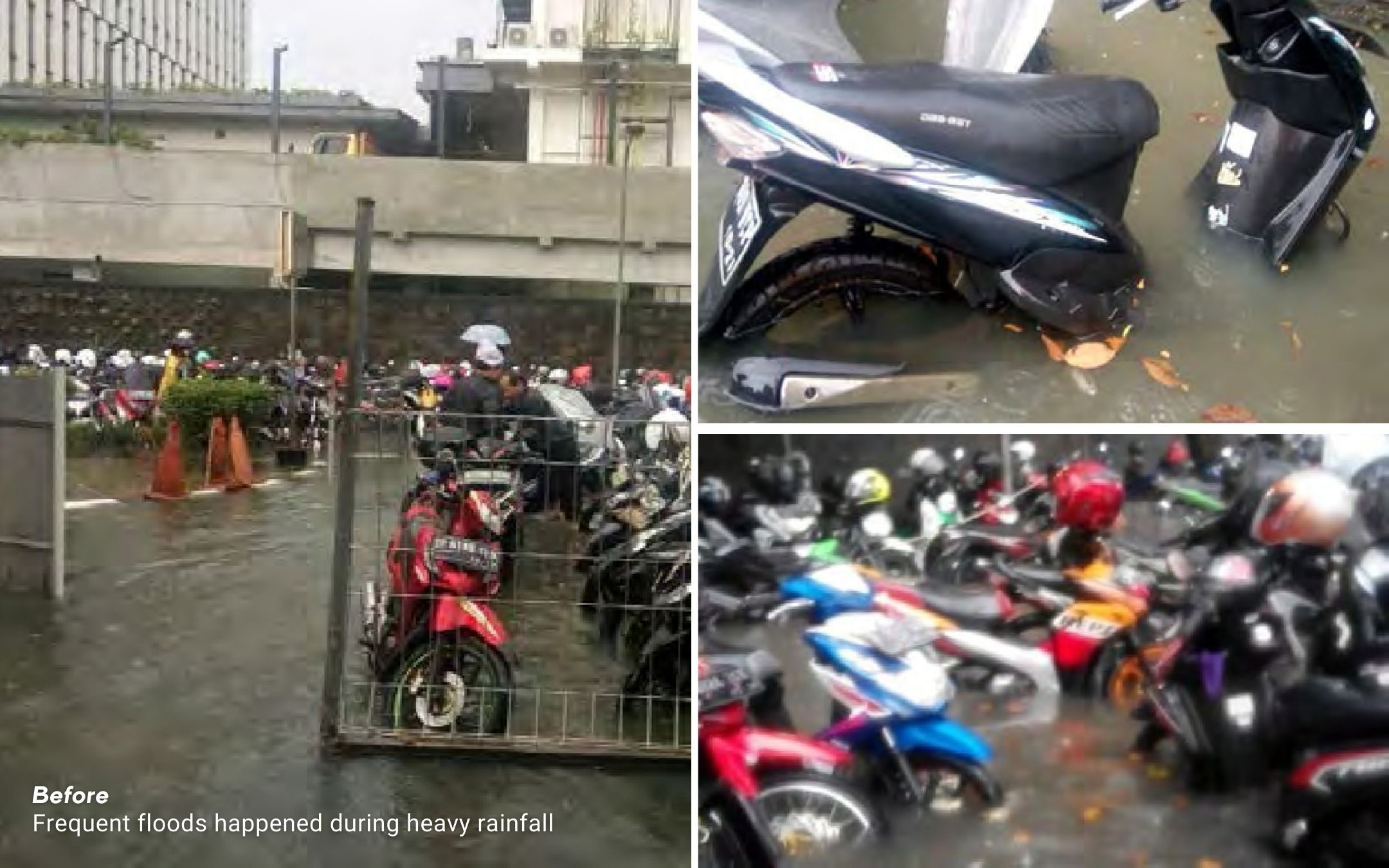
The project began with an understanding of the site’s history and physical constraints. The landscape area at TMT Building was previously used as a heavy machinery parking zone and was almost entirely covered by a thick concrete slab. Positioned below road level and located within a designated water catchment area, the site had little capacity to absorb rainwater. During heavy rainfall, water repeatedly accumulated across the surface, causing frequent flooding and disrupting daily use. Recognizing that this condition could no longer be managed through short-term fixes, the client decided to fundamentally rethink how the ground should work.

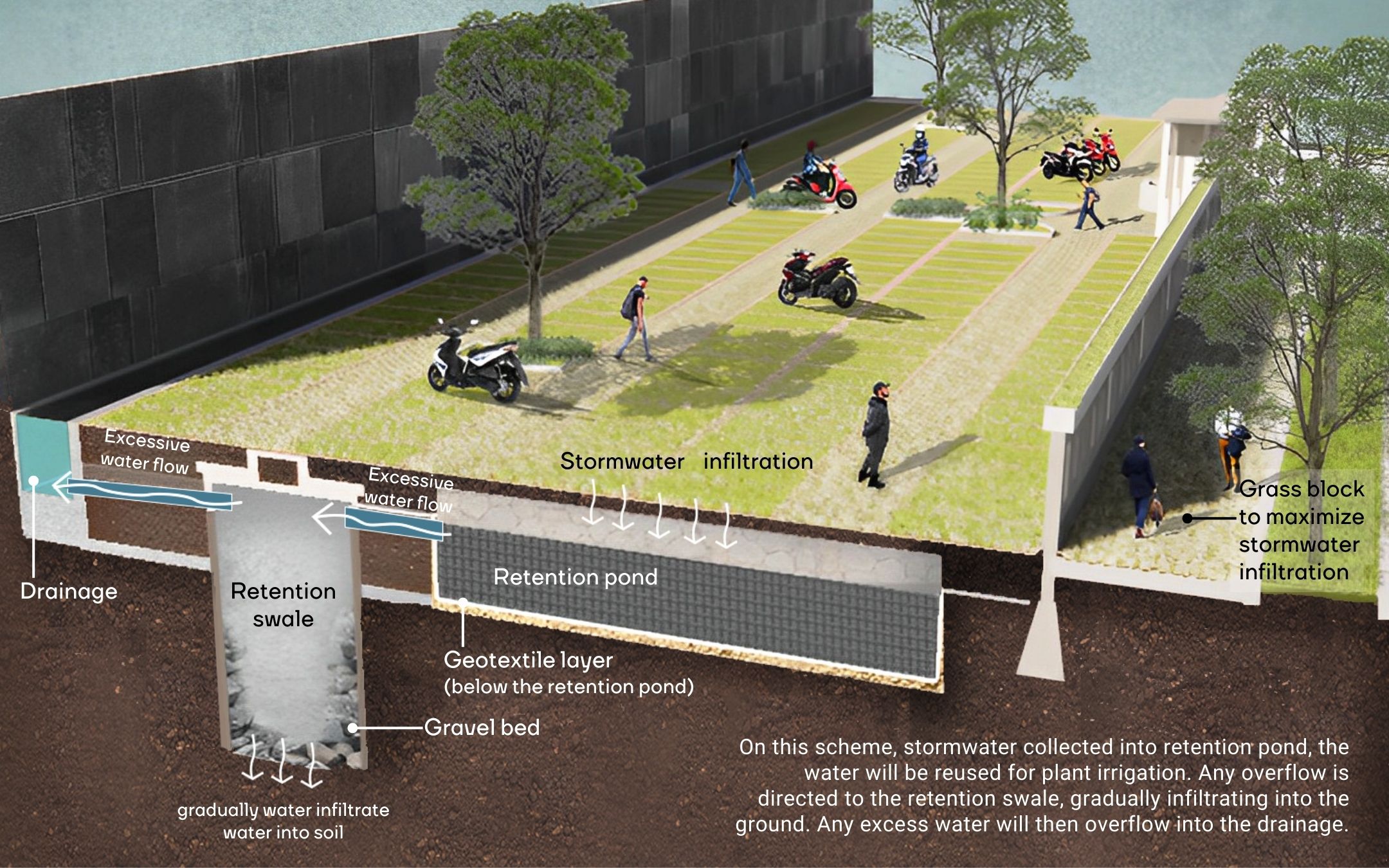
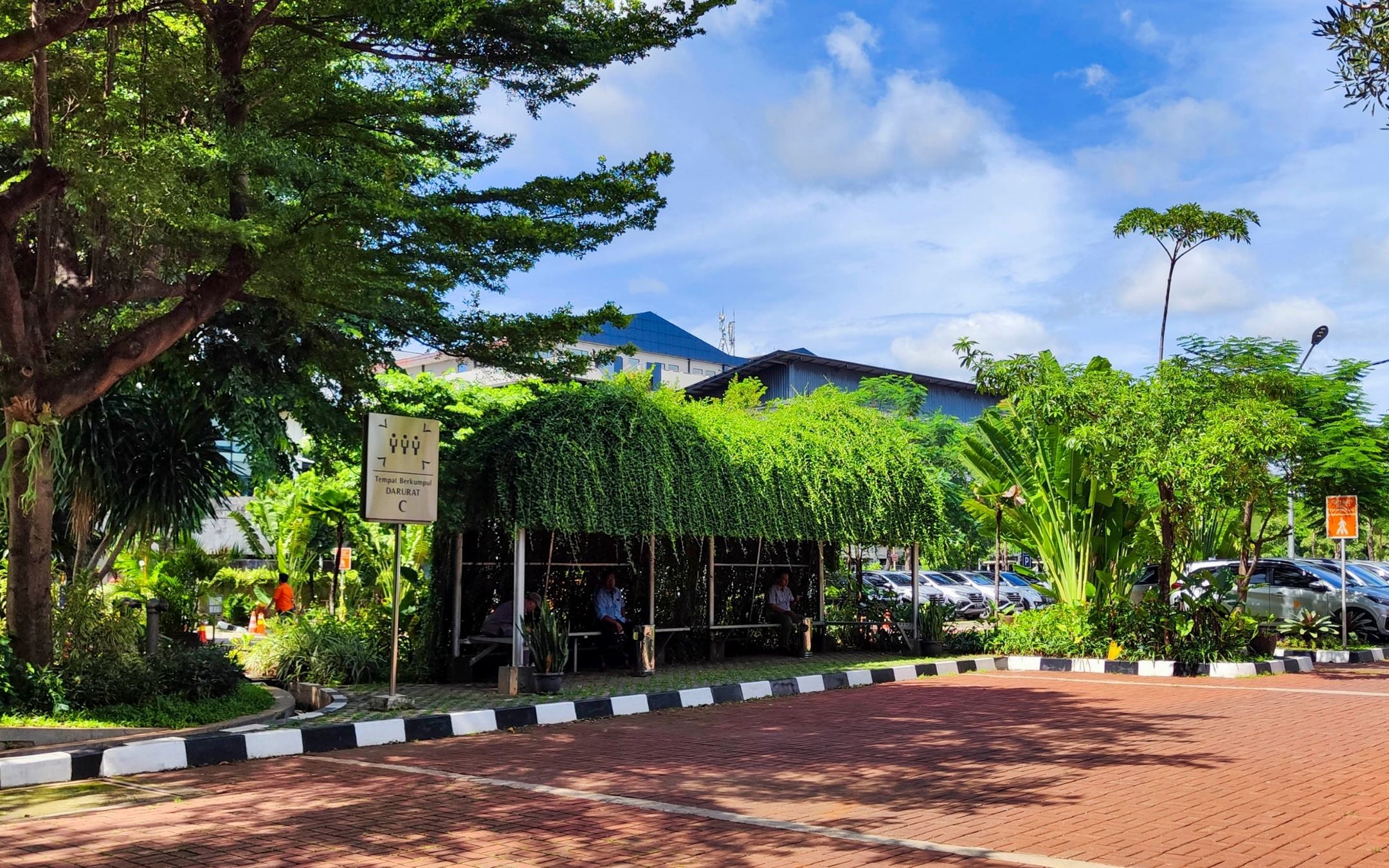
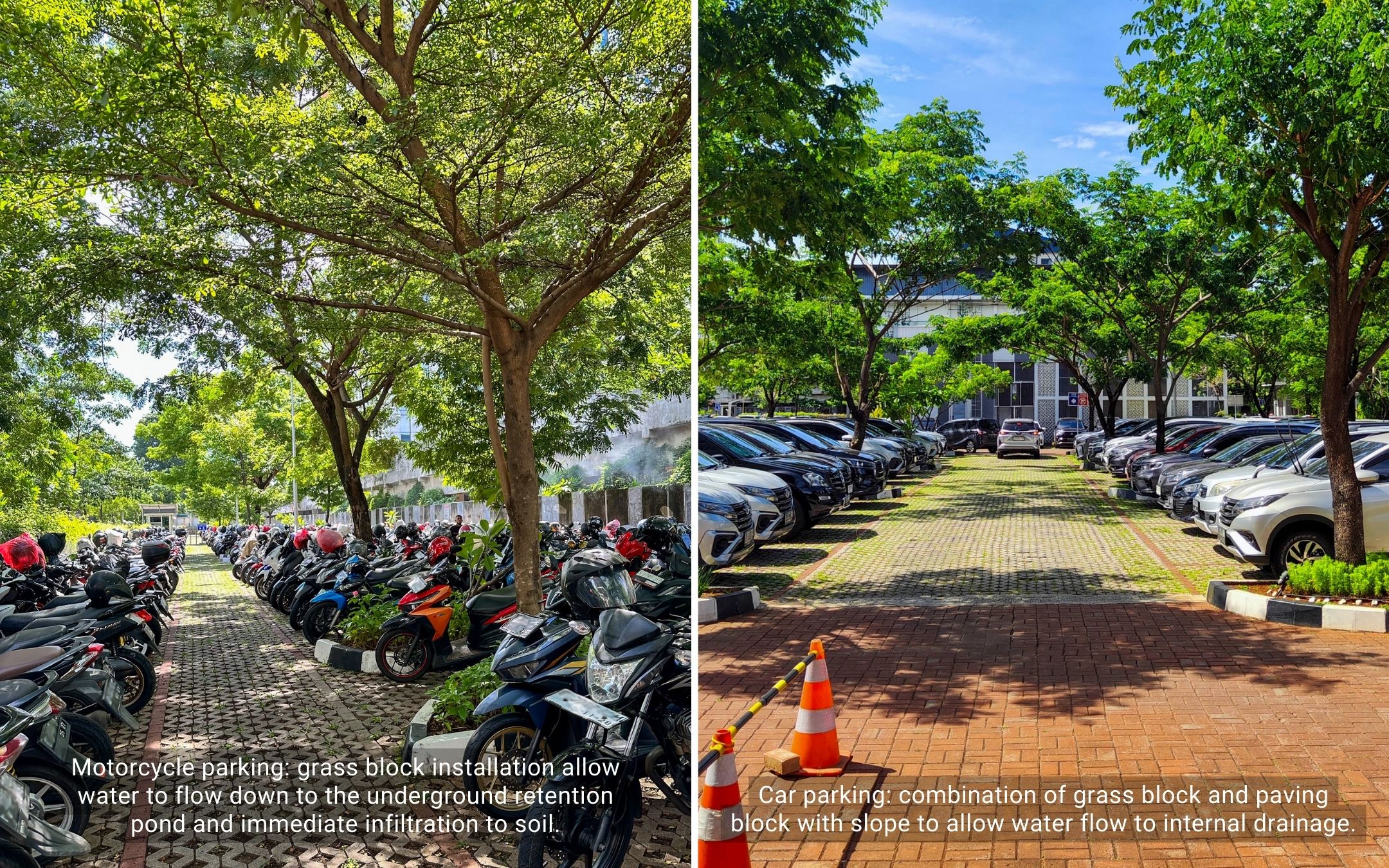
PDW’s landscape strategy started by changing how the surface itself behaves. Permeable paving blocks were introduced across the parking area, with permeability becoming the main consideration in material selection. Instead of allowing rainwater to flow across an impermeable surface, the ground now absorbs water where it falls. This simple shift allows the ground surface to play an active role in reducing runoff before water builds up across the site.
Alongside the permeable parking surface, PDW developed an adjacent landscape-based water management system along the southern edge of the site. Rather than relying on direct discharge, rainwater is managed within the site through a combination of immediate infiltration, temporary retention, and controlled release. Surface runoff and internal drainage are directed into a sequence of landscape spaces that slow water down, allow infiltration into the ground, and hold excess volumes during heavy rainfall. A control gate regulates the connection to the city drainage system, preventing backflow during peak conditions and allowing overflow only when water levels are safe to release. Through this approach, rainfall is primarily absorbed and managed within the site, with discharge to the city system occurring only when conditions permit.
Planting was designed as a functional part of this flood-sensitive landscape system. An urban forest character was developed using a combination of local tropical shade trees and fruit-bearing species selected by the owner. The tropical tree canopy includes species such as Trembesi (Samanea saman), Pulai (Alstonia scholaris), Kiara Payung (Filicium decipiens), and Jamblang (Syzygium cumini), which are well adapted to Jakarta’s climate and effective in forming a broad canopy. Fruit-bearing trees such as Rambutan (Nephelium lappaceum) and Mangga (Mangifera indica) were integrated to introduce seasonal variation and everyday familiarity into the landscape.
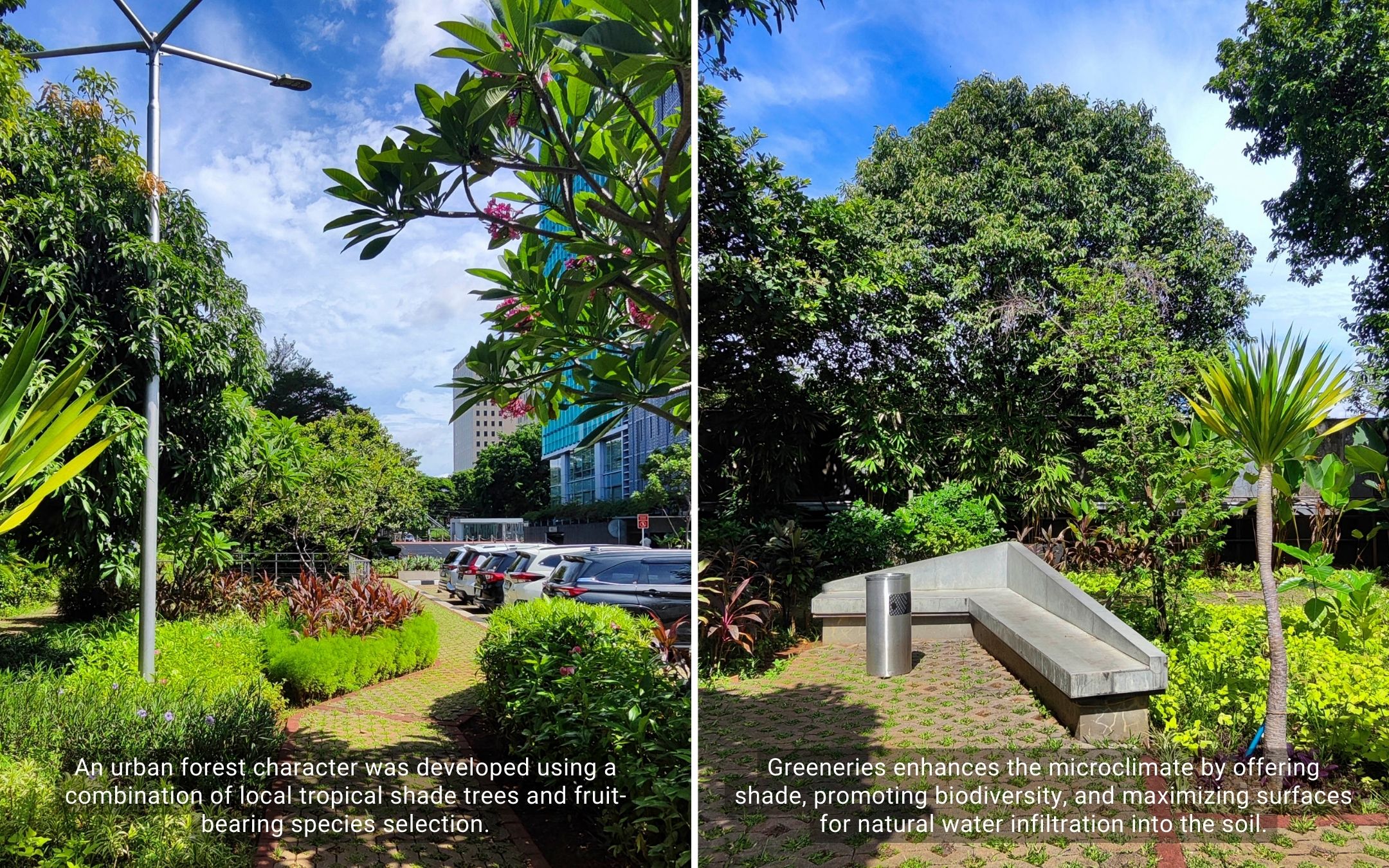
PDW selected shrubs and groundcover species at the lower planting level to support three functions: soil stability, water absorption, and microclimate improvement. These include tropical shrubs such as Aralia (Osmoxylon lineare), Bakung (Hymenocallis speciosa), Costus (Costus speciosa), and Ruelia Ungu (Ruellia brittoniana), complemented by Kucai Mini (Carex morrowii) as groundcover. Together, these landscapes help reduce surface temperatures, improve microclimate, and support long-term ecological resilience. In Jakarta’s climate, where unshaded paved areas can become extremely hot, the combined effect of canopy, shrubs, and groundcover significantly improves comfort across the open ground.
This approach reflects a broader position on landscape design practice in Jakarta. Flooding is not an occasional anomaly but a recurring urban reality shaped by ground conditions, surface treatment, and water movement. In this context, flood-sensitive landscape design should not be framed as an added value or a special environmental feature. It represents a baseline level of design responsibility in shaping urban sites that are expected to perform over time.
At TMT Building, landscape design operates as an active site system rather than a decorative treatment. By treating ground, water, and planting as a single site decision, the project demonstrates how flood-sensitive landscape design can transform a previously problematic surface into a resilient and functional part of the urban environment.
[PDW/PSY]